Showing posts with label An Unearthly Child. Show all posts

Friday, September 13, 2013

Will Peter Davison Appear In The DOCTOR WHO 50th ANNIVERSARY SPECIAL?


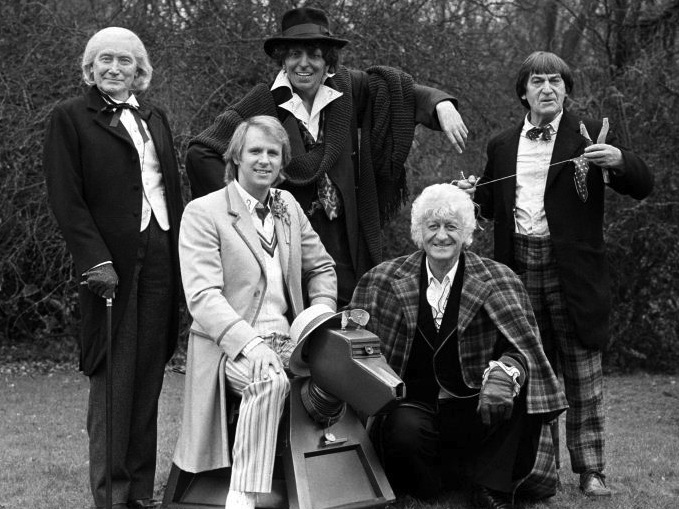
While there has been nothing but a thick shroud of Deny Deny Deny on whether any of the actors who portrayed Classic Doctors would appear in the highly anticipated Who 50th Anniversary Special, The Day of the Doctor,  some interesting news has emerged from the Fifth Doctor, Peter Davison.

Following an alleged staged protest earlier this week outside of the BBC by Davison, Sixth Doctor Colin Baker and Seventh Doctor Sylvester McCoy, presumably captured for some sort of 50th Anniversary tie-in, he had some rather interesting snippets in store for a interview on Daybreak regarding the landmark 75-minute episode.


“I’ve heard lots of rumors, none of which I’m allowed to tell you anything about. I’m privy to them, actually,” Davison said.

“I have got a copy of the script which has got my name embossed across it. So it’s top secret, but there’s other stuff, lots of other things that are going on that people should keep their eye open for around the 50th-anniversary special!”

So Davison has a personal copy of The Day of the Doctor's script with his name on it in addition to being in the know all about the production? That does seem a bit odd for someone who is supposedly not involved with the half century in the making episode. Granted he has been involved with the Modern Doctors, appearing in the Time Crash short alongside David Tennant (and his son-in-law), so the script may just be a gift from the production as well.

I sat down with Davison for an interview last year at New York Comic Con, and at the time he told me he would be a happy participant, but had not heard from Who show runner Steven Moffat.
"Honestly I have not heard anything at all, so I don't know. I'd be very happy to take part in whatever they want me to take part in. I'm just worried that it might be a little difficult to do it and make it work as a proper story. Unless it was a special, almost a bit like David and I did. He's very resourceful Steven [Moffat], so he might come up with the way of doing it, who knows." 
Of course that was nearly a year ago and a lot has changed. The surviving Doctors will be heard on The Light At The End, a radio drama that will team all the Classic Time Lords together for one adventure, there are rumors Paul McGann has filmed a regeneration scene to bridge into John Hurt's dark Doctor introduction, and if the BBC can get Davison, Baker, and McCoy for a faux protest, the odds towards some exciting previously denied surprises may be on deck for November 23rd. But you can be certain Davison and many others will be involved in the overall celebration of the show's anniversary in some manner.

While much involved with the rich history of Doctor Who is being underplayed to the press in regards to The Day of the Doctor, I'm sure there are a few major tricks waiting to be sprung upon us on November 23rd. Though the biggest surprise would be any participation by Christopher Eccleston, who unfortunately for fans has shunned association with the episode, and anything to do with Doctor Who for that matter.

You can read my full two-part 2012 NYCC interview with Peter Davison HERE and HERE.


Friday, January 18, 2013

DOCTOR WHO INTERVIEW: Peter Davison Recalls His Time As The Fifth Doctor (Part One)

There have been few science fiction shows with a richer history than Doctor Who. The BBC series celebrates its 50th Anniversary this year and has big, albeit top secret, plans to mark the incredible milestone. There have been eleven incarnations of the Doctor during the show's run, played by different actors over years and allowed the immortal time travelling adventurer to hop across the universe for a half century.

Peter Davison first appeared as the Fifth Doctor in 1981, following Tom Baker, whose seven-year stint was trademarked by his mop of curly dark hair and colorful long scarf. Baker's run left a memorable stamp on the popular Time Lord that would seem like an intimidating act to follow. At 29, Davison was the youngest actor at the time to portray the role, which until then had been played only by a succession of middle-aged to near elderly Brits. His first full episode, Castrovalva, aired in 1982.

I had the opportunity to catch up with Davison at New York Comic Con shortly before he took the stage for a panel discussion and fan Q&A. For this two part interview, we covered many topics, which included Who fandom, his thoughts about following Tom Baker's legendary stint, how the series has evolved since the era of the Classic Doctors, what he knows about the 50th Anniversary plans, and the real life ironic time warp no fan could have come ever dreamt up: his own daughter's marriage to the Tenth Doctor, David Tennant.


We're here at New York Comic Con, where you will be meeting fans, signing autographs and participating in panel discussions over the next three days. How do you like attending these kind of events?

DAVISION: I like it. It's fun. I think that it's very important. I always thought that fandom, my experience for the most part is of just Doctor Who fandom as most of things I have done has been Doctor Who, that they are an extraordinary kind of set of people. Everyone appears to be super nice.

I covered Matt Smith's recent New York City season premiere screening in August, and looking at the attending audience really hit home how the show's resurgence is attracting a young fan base. Have you noticed that shift as well?

DAVISON: Yeah I have. Certainly that's true. A lot of people now that come up and go ‘I love your Doctor,’ and I go ‘How on Earth did you manage to see that? Because you're 18.’ What's interesting is when they get through either Matt Smith or David Tennant, then they look around and go to the Classic Doctors. And what's interesting that over the years when I was part of the main of what is now the classic Doctor Whos, I felt almost out of place because I was much younger than anyone else. But now with the return of the series and the Doctors themselves getting younger, I feel almost more a part of the Modern Doctors then the Classic Doctors. I'm not, I know. I appreciate my place. I am a Classic Doctor, but weirdly I don't seem out of place now.

You were the youngest actor to portray the Doctor at the time?

DAVISON: I was the youngest Doctor apparently. Until Matt Smith stole my crown. Little upstart. No I'm very happy.


Tom Baker had a memorable seven year run on the show. His particular take with the scarf, hat and long coat really provided the Doctor with a look that hit it off with the masses. Was it daunting to succeed Tom in the role?

DAVISION: It was a bit daunting I suppose. It wasn't so daunting as it was coming over here to do a convention after. Because over here for the most part no one knew any other Doctor other than Tom. In Britain Tom was the Fourth Doctor.  My Doctor was William Hartnell and Patrick Troughton probably more so than John Pertwee. So simply I was number Five in the line of Doctors. Daunting because he had done it for seven years I suppose, but I was very happy to take on that challenge. I was a bit more worried when I came over here as the kind of upstart who replaced the Doctor who was Tom.

How long were you the Doctor by the time you made your first appearance here?

DAVISON: I think actually my first appearance here was probably before I appeared [on TV]. So no one had actually seen me in Doctor Who. I remember I was in Tulsa, Oklahoma. They were very nice but I remember being asked weirdly a question about a Patrick Troughton story as if I was the Doctor. It all must be in my head somewhere.


Everything these days seems to finds itself on the receiving end of intense internet scrutiny. Are you happy you didn't have to deal with bloggers, online reviews and internet spoilers during your run on Doctor Who, especially at the transition stage?

DAVISON: Hopefully I wouldn't have read them. I think it's a huge mistake for actors to take anything seriously in terms of what those people say. Because they are representative of a certain of the people, but they're hugely destructive. Those people who write those things they can do so in this certain virtual anonymity of the Internet. But sadly the nature of us as human beings is that you can get 200 people saying you're fantastic, and one person saying you're terrible, and it's that person you'll take note of. You get one person that says you're terrible and you think ‘Oh my God I'm terrible. I'm terrible. Just awful.’ And such is our insecurity. So I try to just ignore it. Its not kinda relevant. You do what you do.

Did you have much input regarding the Fifth Doctor?

DAVISON: In terms of just the practical side, as in the costume, not that much. I suggested the cricketer theme. The celery stick was something that John [Nathan-Turner] came to me and said ‘I want something. I'm trying to think of something interesting for you to wear on your lapel.’ And he came to me and said ‘I've got this great idea: A stick of celery.’ And I said ‘Why?’ I said ‘Well that's fine as long as you explain it by the time I leave.’ We got to the very last story and I reminded him he hadn't actually explained it. So they wrote a thing in there that it was an antidote to a certain gas that the Doctor is allergic to. And that is how it was explained. So it was fine. That was all John, not me.

The Doctor's attire certainly became even that much more colorful with Colin Baker as the Sixth.

DAVISON: It was on drugs by the time it got to Colin Baker's time.

What were you able to bring to this younger version Doctor Who?

DAVISON: You’re cast really because of who you are. So you have to look at yourself, I'm younger and I can move a bit quicker. I think what I wanted to bring to it was to bring back a kind of innocence to the character. He wanted to do the right thing. If there was an unknown in mind about Tom's time as the Doctor, and I enjoyed it greatly, it was almost so kind of glib. You never really thought there was a threat, and I loved it for that. It was very funny. But I know that [producer] John [Nathan-Turner] wanted all of the funny bits when I took over and I didn't want that to happen. But I did think it had lost some of its innocence a bit and maybe I just felt that was something I could bring to it. 


Was there a conscious effort to avoid re-tracing the tracks of the Fourth Doctor?

DAVISON: I couldn't be Tom. Tom had his own brilliant way of doing it and as I say, I loved it. But I remember one episode I think he's about to be sliced in half by by some kind of terrible device and he's offering jelly babies around. I remember thinking that really in a way undermines the point of what's about to happen. You can have humor in, it but if it's at the moments when you're in danger, maybe it takes away from it. So I suppose that's really what I wanted to bring back to it, an innocence with all this, not power, but everything at his disposal. Just trying to do the right thing.

What are your memories of your last episode, working your way towards the regeneration scene?

DAVISON: It's a very strange feeling knowing that, as Tom must have felt, that at some point the next Doctor comes in and you shoot the regeneration scene. I have to say generally that the last story was the best story that I did. I think it was brilliantly directed and I couldn't have been happier with it as an enjoyable experience. Except maybe the fact that that I've said before in my great regeneration scene my limelight was stolen by [companion] Nicola Bryant’s chest bending over to me saying ‘Doctor, Doctor are you okay?’ And I'm thinking everyone is just going to be looking at her cleavage. No one is going to be looking at me at all.


Check back here next week for Part Two with Peter Davison where among other things, we talk about BBC's memorable teaming up of the Fifth and Tenth Doctor in 2007, what family life is like when it has two Doctors in the house, and what Davison knows about the Who's 50th Anniversary.


Tuesday, January 8, 2013

David Tennant Says He Still 'Knows Nothing' About The 'Doctor Who' 50th Anniversary... The BBC Thinks Otherwise...

So all us Whovians are more than aware of Doctor Who's big 50th Anniversary celebration set for later this year. Exactly what it will entail is still a highly guarded secret. Save for the previously announced made for TV-movie An Adventure In Space and Time which will chronicle the show's genesis in the '60s, a set of commemorative Who postal stamps, and a series of eBooks based on each of the Doctor's identities, there has been scant official news from the BBC or show runner Steven Moffat. But just about everyone with a connection to the series, past and present, who has been asked in so many terms if they will be involved or invited to be involved, have claimed absolutely no knowledge of partaking.

David Tennant appeared as a guest on The Jonathan Ross Show and was accordingly grilled on what he knows. As par the course, Tennant revealed zilch about the possibility of reprising his role as the 10th Doctor. "I know nothing," he asserted. But what is more interesting is that he revealed that a rep from the BBC, apparently terrified of leaks, followed the actor backstage and swore him to secrecy regarding the 'nothing' he knows.

Here is what he told Ross:
"I'll tell you how terrified they are. In make-up, this lovely lady from the BBC came in and she said 'I've been sent to say that anything about the Doctor Who 50th anniversary must not be mentioned on television.' That's how scared they are! I don't know anything and they're sending out spies to shut me up from telling you things I don't know!"
All in due time. There have been more denials than anything else, and obviously what are the likes of Tennant going to do when interrogated live on camera while trying to maintain the strict shroud of secrecy that has been typically associated with the show? There is something grand planned, of that we can be certain. And frankly if Tom Baker agrees to put the scarf back on one last time to interact with Matt Smith, David Tennant and Peter Davison, I'd rather be surprised when the 50th Anniversary Special airs on November 23rd than read all about it online first.


SOURCE: Blastr


Sunday, December 30, 2012

INTERVIEW: 'An Unearthly Child' Director Waris Hussein Recalls The Earliest Days of 'Doctor Who'


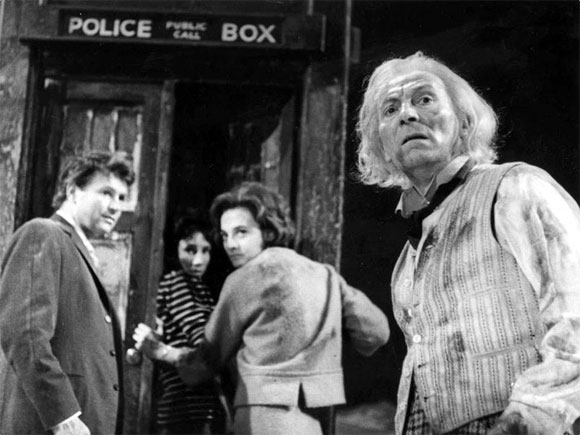
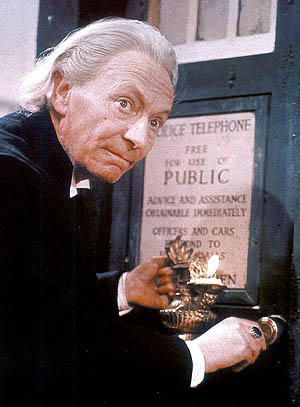
Earlier this year I had the opportunity to talk with Waris Hussein, the director of the initial ten episodes of Doctor Who, shortly before a special screening of An Unearthly Child, the very first episode of the series. Doctor Who debuted in black and white on the BBC on November 23, 1963 in the direct shadow of President John F. Kennedy's assassination. The episode introduced the world to the mysterious grandfatherly Time Lord known only as the Doctor, played by William Hartnell, and his iconic time machine the TARDIS.

In my one-on-one interview, Hussein revealed what was involved for Doctor Who to make its mark at a time when televised sci-fi was unheard of in the UK, as both a science fiction series that not only preceded Star Trek to the airwaves by nearly three years, but was also intended to educate children.

We discussed William Hartnell, the first actor to portray the one of the eleven incarnations of the Doctor on TV, whose initial take was that of a sinister Time Lord who also happened to have a granddaughter. Hussein was forthcoming on Hartnell's initial reluctance to take on the role, the hurdles they had to overcome in 1963, and gladly shared his thoughts on the still standing legacy of the show.

Shortly following our interview below, An Unearthly Child was screened for a packed audience at New York's Paley Center for Media, where he also provided live commentary and participated in a Q&A with the fans. He noted that the episode was a multi-camera live-to-tape shoot on the smallest set the BBC had to offer, a converted warehouse. With a mere single day shooting schedule and a budget of £2000, there was little time for elaborate blocking or retakes.

It's also worth noting that BBC announced in August production on An Adventure In Space and Time, a 90-minute TV movie that will chronicle the show's genesis and the various figures involved in Who throughout the years. As part of Doctor Who's 50th Anniversary, we will see many of the behind-the-scenes events spoken about here brought to life on the small screen.


Please set the scene for us when you were approached for Doctor Who. What was the state of televised science fiction like in 1963 Britain?

HUSSEIN: Very very little was known about science fiction apart from the films we actually got from America. I don’t think Britain had many approaches to the subject. I think Doctor Who was one of the very first. All the science fiction we saw were from movies that came out from here.

What was your first reaction to the driving concepts behind Doctor Who?

HUSSEIN: Never skepticism, some degree of intrigue and uncertainty. It’s a very eccentric idea if you think about it. What everyone says about it, and followed later I know by Star Trek, they were all set in ships and things that went into the universe and the outer regions. This is a telephone box which opens into a vast ship. How eccentric can you get? That itself was an intriguing subject matter, and then of course the characters. We should not forget that its not just science fiction, its an educational situation. We were trying to, through this medium and through this format, educate kids by doing one episode in the past and one episode in the future. That’s what the first one was: Fire. Looking for fire. That sort of thing. Then you enter the Daleks, and then you have the second lot which was about the travel across Europe getting to China (Cathay in those days), with Marco Polo. So one after the other, and that format still exists as we know, with much more embellishment.


So among other things, Doctor Who was conceived as televised history lesson for children?

HUSSEIN: Yes, but not to give them lectures, to give them stories with an adventure behind it as well. Marco Polo taught kids all about a civilization that they probably never would have herard about other than that. You know, China.


The backstory regarding the broken chameleon circuit of the TARDIS has given Doctor Who a unique  and now iconic association with the series. Was it from day one always the idea, budget contraints or not, to have the TARDIS permanently remain a police box?

HUSSEIN: This was Sydney Newman who created it, his original idea and was to my mind, genius. Who else would come up with something like this? I think it's brilliant. They are more or less diminished now. In fact it's become an iconic image.

Even at the show's inception, was the Doctor always referred to as only 'the Doctor'? Was there ever a name on even the earliest of the scripts you saw?

HUSSEIN: Never given a name, and that is still kept to this day.


The show in the last year has had many cryptic plot points teasing what the Doctor's actual name is, repeatedly playing with the question: "Doctor who?" Revealing the 'who' seems to spell catastrophic consequences for the universe.

HUSSEIN: Well I sincerely hope they don’t because there is a kind of mystery attached to this character. He’s been portrayed in many ways now, but I don’t think he’s a human being you see, and I don’t think they should make him totally human. He should be unpredictable, and that’s my feeling. That’s how it started anyway.

What was it like working with William Hartnell as the Doctor?

HUSSEIN: William was an eccentric actor as well as a character. He was very conservative in many ways in his approach to life. I think he was somewhat taken aback when he confronted a woman producer [Verity Lambert] because he was very much a male oriented person. And then a British Indian [director] for Heaven’s sakes! I was the very first Indian ever to be doing what I am doing. And I think it must have been a very unusual set of people that he confronted.  We had to woo him and persuade him to be a part of the team. I have to say I am happy he did become a part of it, we was a very good actor.

What was the reception to the show when it aired?

HUSSEIN: The first airdate was the same date when President Kennedy was assassinated, so there was a pall that descended on everything and the BBC had to repeat it. So I think as a result in an odd way we manged to pull ourselves out of this period and it was seen as an innovative show. I think a lot of people reflected this in their reaction. Thinking 'You know, maybe we are facing something unusual and there is a future in it.'


Do you have any particular favorite incarnations of the Doctor or Who moments from over the years?

HUSSEIN: I am reluctant to pinpoint things. I left it after the Marco Polo episodes, and I went on to do other things. So it was rather like giving birth, getting the kid adopted and moving on (laughs). Let someone else carry on the education. It's not easy to pinpoint and say 'Oh by the way I really like so and so,' because I think its unfair in many ways. Each story had its own embellishment and its own creativity. There have been incredible Doctor Who's subsequent, and also to my mind some that didn’t work out. As we know the show at some point was put to bed, and it was only revived by Russell T. Davies. So I do not like to pinpoint, I just think that it's great that it's still going.

What was it like shooting simultaneously with multiple cameras in a studio in addition to the limited visual effects of the time? Did that force you to be more creative?

HUSSEIN: We had none of the facilities of today. Forget computer generated stuff. We had to literally be inventive of what we did. Sand storms by interfering electronically on the monitor. The opening titles of Doctor Who were all shooting into monitors from one camera to another. That's why you get that strange wiggly effect. That's the kind of thing we had to be inventive of about. It was a whole different landscape that we worked in. We were pioneers, and what followed was the growth of something we planted.

Were two versions of the episode produced?

HUSSEIN: No. The pilot and then the main one. The first episode was the one after the pilot. Not two pilots, just the first. There were certain things we kept from the pilot. The script didn't change radically, but certain characteristics changed. We softened the Doctor, we did certain things like that. Dealt with Susan the granddaughter is a different way. Syndey Newman oversaw it and he was there as creator of the show. 

What do you expect from revisiting the episode all these years later tonight, plus providing live commentary to the audience? Is is hard to not rethink your work differently now in your head?

HUSSEIN: Absolutely. Gosh yes. I'm sure to be cringing tonight watching what I did. You know, it's bound to happen isn't it? I have not seen it for a very long time. In a funny way I have just not gone back to it. It's like revisiting something you have a pleasurable memory about. Well tonight we'll see it, and will see.

Are you looking forward to the the 50th Anniversary next year?

HUSSEIN: Absolutely. Yes, I hope they do something splendid with it.