Showing posts with label Interviews. Show all posts

Friday, November 29, 2013

INTERVIEW: Spike Lee Talks Re-Imagining OLDBOY


Spike Lee's re-imaging of Oldboy, the 2003 cult favorite dark revenge thriller is now in theaters. Starring Josh Brolin, Elizabeth Olsen and Sharlto Copley, this update follows the journey of a man suddenly who suddenly finds himself imprisoned in a hotel room for twenty years, and what lengths he will go to in order to solve the mystery of "why" when he's released.

I had the opportunity to participate the in press junket for the film earlier this month, and was among the online reporters invited to this roundtable interview with director Spike Lee. Here are the highlights from the 20-minute Q&A session.


So is this the opportunity to direct some action for you? Is that something that really attracted you to Oldboy. I know that the choreography is it seems like it has your hands in it. And I don't know if you did most of the fight choreography yourself.

LEE: No, I'm not a fight choreographer. But it was the story. It didn't have nothing to do with the action. It was a part of it though. It was the story. That was the reason why I was interested in it, in doing a re-interpretation of this film.

What was it about the story that pulled you in?

LEE: Revenge. Revenge. And the fact that you had this individual who's locked up. Why don't you, yeah close it (door closing and locking). Individual who's locked up for twenty years not knowing who did it or why that was done to him.

Do you expect that most people have seen the original when they see yours?

LEE: Most people have not seen the original.

Was it easier to adapt a foreign film?

LEE: I don't think so. Mark Protosevich wrote the script, did a good job. But we, Josh Brolin and I, never ever sat down and said for any specific thing like that's Korean it's not going to work in America. We never thought like that.

When you decided to do it, did you have the cast in mind already?

LEE: No, I just knew that Josh and I had been talking about for years working together. So it was Josh and I went in together and with the help of my casting director, Kim Coleman we had to fill out the roster.

Can you talk about how you came to meet Josh and why you always wanted to work with him?

LEE: Well for a period of four or five years we always meet at a premiere or film he's doing here in New York. American Gangster, No Country For Old Men, Wall Street. And we always see each other during the movie. We always end up together, having a drink at the after party (laughter). “Let's work together.” “Okay.” Then we see each other next year for another film. So four or five years this went on and then finally Oldboy happened.

Is there a story that he needed the blessing of Park Chan-wook? You needed it too?

LEE: Yes.

True? And has he already seen the movie?

LEE: He has not seen the film yet. But that story is true. Before Josh agreed to do it he met with Park. Asked for his blessing. Park gave it and told Josh don't try and remake my film, do your own film.

Now this movie, you know it hinges on a twist. You guys, I think, put a put a sort of a different twist on this twist, sort of dangle in front of our face more than the other film does. And you make it a little bit more eye opening than that film did as far as I can tell having seen yours first. Is this something you felt like you had to do, because it was sort of an obstacle?

LEE: I had to do what?

I'm trying to say without saying it. But I mean the other film twists sort of never really gave you the ability to predict it. Whereas your film I feel like, having viewed it first, and not knowing the twist, I was like how did I not see that coming.

LEE: I don't know how to answer that. I mean, I don't want to give away the twist. But I do think that for a lot of people that see it they would not have heard of Oldboy. They've never seen a Korean film in their life. So it's gonna be new to a majority of the audiences that sees this film.

What sort of thinking went into this to give it an American as opposed to an Asian sensibility?

LEE: Like I said before, Josh and I never sat down and said “This is Korean culture it can't work in America.” That was never our thinking. We don't think like that. Storytelling is global. Excuse me storytelling is global. It's all about what's gonna work for the story. So it never came down to nationality. Ever.

You purposely didn't really define where this takes place?

LEE: Right.

I think people might've assumed “It's a Spike Lee film. Maybe it's New York.” You know you shot in New Orleans, maybe it's going to be New Orleans. Talk about why that is. It's such a dark film you really didn't want to attach location to it?

LEE: Well we just wanted to be non-descript city. That's a very hard thing to do in New Orleans. New Orleans is one of the most distinct cities in the United States of America. So it was a challenge to shoot there, but not make it look like New Orleans. The reason why people shoot in Louisiana, because the state of Louisiana has the best tax break now. Rebate. So you have hundreds of people who left LA and moved to New Orleans because that's where films are being made; that's where the work is.

What's New Orleans like these days? Has it is it bounced back at all?

LEE: There's been some progress, but the main thing is still a large number of African-American population which is not returned yet and probably won't. They've been forced to migrate to Atlanta, Houston, San Antonio. Have found better paying jobs, better schools, a better way of living. So that's still been the thing that that the city is missing.

Revenge aside and character development, in the back of my mind I'm thinking about the prison system. Do you think that would work maybe there wouldn't be so many people returning back to prison if they'd went through some sort of system like that.

LEE: No (laughter).

I read that Josh Brolin seems to think that the longer director's cut, as they say, that you know three-hour version of this film, he sort of prefers.

LEE: He never.  Let's clear this up right now. There never was a three-hour cut. What Josh was shown was like two hours and I would say twenty-five minutes. But there never was a three-hour cut.

My question was going to be what caused this length seemed to perfectly mirror the length of the original film and it also seemed like, I don't know, what could've been on the cutting room floor. Can you start to talk about what might have been, you know, if it wasn't a two hour, twenty minute version, what would've been in there?

LEE: Man, all I'm gonna say is it's a tough business. That's how I'll answer that question.

Is there anything you took away from this film in a sense of whether it be the long one take action sequences that you can see yourself enjoying and doing more of in future films.

LEE: Hmm. We've done a lot of one takes over three decades of my film-making. But it was fun trying doing the fight sequence. We worked on that long and hard. Josh worked really hard with the stunt coordinator, the stunt guys. Sean Bobbitt worked very hard. The great DP because we had to not only to have to choreograph the fighting, we had to choreograph the camera too. We shot that, if you know that the original film that was really shot in one plane actually was left to right. Ours was on three different levels. So that's somethingthat we had fun doing.

Since Josh was in here, was he a little chunkier in the beginning of the movie? And then lost weight.

LEE: Oh yeah, he gained 50 pounds.

Can you discuss that?

LEE: Well he met with a bunch of doctors and dietitians, and they came with state diet, the state plan, the state program for him to gain weight and lose weight over a relatively short amount of time. So through, the way it was explained to me most of the weight he gained was water. So he had to lose it, lose like twenty thirty pounds over a weekend. We made that transition from shooting in a cell to going back outside. Josh will do whatever it takes.

How did that affect his personality would you say?

LEE: Well, he said that, I mean it has to, I mean, DeNiro I mean is famous here. DeNiro talked about the month depression he had after doing the Raging Bull and the weight he had to gain for that. Right now it's much more advanced and doesn't take months to lose the weight, but it does affect your psychology though. I mean you can't be happy about, uh, you become another person with that weight gain.

And to you what  was, I mean Josh Brolin first and foremost out of this too but, sort of the second most important casting decision. Was it Sharlto? Who did you feel that needed to be the exact right decision to make this your movie as far as the characters in the film the original?

LEE: All the leads. I wouldn't put them uh numerical order but they're all crucial. Uh, Sharlto, uh Sam's role, Liz Olsen. Those are all crucial so they all were high priority, that to surround Josh with the best actors we could get.

Can you can you talk about the casting process was it was it did these, once you kind of honed in on these performers, did the character kind of get catered to them, or were you casting sort of Sharlto types for the villain?

LEE: No, don't we didn't cast anybody else.  That's what we wanted. And I remember the first time I saw him I knew who he was and that was District 9. So when I see a performance like that, I make a mental note that's somebody I wanna work with in the future. And this is an industry where everything is timing. So you might have a role but they're on to do another movie whatever happens, so you have to wait until it happens. That's the case it was with Josh and I working, cause I said before we'd talk for four or five years working together, but that's never been presenting itself until Oldboy.

Is there a shorthand now working with Sam? And does he give any input or is he allowed?

LEE: Sam is allowed. Samuel L. Jackson is allowed to do whatever he wants to do (laughter). But it was great working with him again. The last time we worked together was in Jungle Fever, which was 1991. And it's like we never missed a step. He called me up and said “I wanna be in this film.”

Was that his idea the mohawk?

LEE: No, that was my idea. When you cast Samuel in film you're always thinking about what's the hair gonna be like. So I asked if he ever wore a Mohawk before? He said “no.” I said you can wear one in this film if you want to. And he said “Let's do it.”

And but a blonde one no less.

LEE: We had two different colors, so there's one when Joe's locked up and then the change when he gets out. But passes the time.

Some of some of the visual choices in the film. One that jumps out to me, and is sort of because you guys gave out the umbrellas to the press. So that in particular was the big change between the two films. Who came up with that? There's just the look of the umbrellas, the colors, the vibrancy that type of thing.

LEE: Well that color is one of Nike's most popular colors now (laughter). It's called Bolt. And I we wanted something that, again story, he's been locked up. We had to have something visual that would grab his attention. So I mean a black umbrella? He's not looking for a black umbrella. I mean he's gonna look at something that blares out “look at me.” Cause we had to think like Sharlto's character. This is a plan. He spent years putting this plan into place. He's thought about every single thing. The color of the umbrella, where we're gonna drop him off, who’s the person handing the umbrella, who I'm gonna cast for all these people we're showing on television. All that stuff, all that plan was thought out. We had to think like, think like him.

Was that sort of then your nod to Nike? To have the Bolt color?

LEE: Imma do more than that (laughter).

Are you going to do another commercial for them anytime soon?

LEE: Well you gotta ask Michael Jordan (laughter).

Anything specific you like to do on all your films techniques that you were still able to bring to Oldboy just to make it more your own?

LEE: Just do what I do. Do what I've been doing since 1986. To be honest there was really no extra. I never came to a situation where “Oh God, I've never done a film like this before. What am I gonna do?” It was never that thinking. It's another film, it’s a different story. It’s still storytelling.

Do you have a preference for shooting, uh, film versus digital? Or any opinion about that at all.

LEE: It depends. When you have money you can afford to shoot on the film. We shot some 35. We don't have money. My new Kickstarter film, which is called Da Blood of Jesus, we shot this on this new Sony Camera called F55 which was wonderful. We can afford to shoot on 35mm with the amount of money we raised on Kickstarter.

You must really love Kickstarter, because I know when you started you had credit cards paying for your movies.

LEE: That was Robert Townsend, that wasn't me. I aint even have a credit card (laughter). But what the point I was trying to make a lot of times with these criticisms I was getting was the principles of Kickstarter I've been doing since before there was Internet, before there was Twitter. Social Media was me calling people up, writing postcards, pens to paper, writing letters, so the principles have not changed it's the technology.

You yourself invested in other people's Kickstarters? Or you sort of just using it for your own purposes.

LEE: Oh no, no, no. I've invested in at least eight or nine projects since I got on Kickstarter.

And can people I mean do you sort of tweet it out there, I mean fans of yours that sort of trust your you know your work can they see what you've invested in and be like this may be something I wanna look into as well?

LEE; Oh yes. If you go, if you go to Kickstarter and look under “Spike Lee,”  you'll see a listing of film and the names of the films and filmmakers that and I think the amount of money too that I've contributed you can check it out.

What's been like the coolest giveaway you've done through Kickstarter?

LEE: Well that's really the most expensive one, where you get to sit with me courtside at a Knick game. And go to dinner.

How much is that?

LEE: That was $10,000.

Wow.

LEE: And we sold 36 games. But I gotta pay for tickets too so it's not really. Tickets are $3400.

Can you talk a little bit about Da Blood of Jesus?

LEE: Da Blood of Jesus?

Yes.

LEE: This, Da Blood of Jesus title of my new film. Uh, it's about people addicted to blood but they're not vampires. It's a temporary film. We shot it in New York City in Martha's Vineyard and we're editing the film now. It's starring two relatively unknown actors but great talents. Stephen Tyrone Williams, who was in Nora Ephron's Lucky Guy with Tom Hanks. And a young British actress, her name is Zaraah Abrahams. So they did a phenomenal job.

And is that a comedy?

LEE: There's humor in it, but a lot of blood and sex too.

Cool (laughter). Thank you.

LEE: Thank you.


Thursday, October 17, 2013

NYCC 2013: OLDBOY Screenwriter Mark Protosevich Talks Film's Transition From Steven Spielberg To Spike Lee


Spike Lee's remake of Oldboy starring Josh Brolin and Sharlto Copley is on deck to hit theaters on November 27th. Film District saw to it that the dark psychological revenge thriller had a presence at New York Comic Con last week with a Main Hall panel featuring screenwriter Mark Protosevich in addition to cast members Micheal Imperioli and Pom Klementieff.

I participated in round table interviews alongside several other online outlets with the available talent and among the things brought up during the paired interview with Mark Protosevich and Pom Klementieff was the film's early stages as a vehicle for Will Smith to be directed by none other than Steven Spielberg.


Protosevich elaborated on the remake's interesting genesis with the two unlikely Hollywood icons:

"I first got involved in this because I got a call from Will Smith, who I worked with on I Am Legend, and he said, 'I want you to write my next movie. It’s a remake of Oldboy and Steven Spielberg is going to direct it.' Two days later I was on a plane to LA and I was meeting Spielberg. That was going to be the package, and then it completely fell apart."

"That may have been the initial interesting hook for me, working with them on this, as opposed to just being asked if I was interested in remaking Oldboy. But when that fell apart, I had become so passionate about the material and had worked out a 30 page treatment. I had the movie clear in my head and the producer still wanted to movie forward, so I said, 'I’m in.'”


"This one really meant something to me. You can get into the whole issue of fundamentalists out there who feel that the original movie should never have been remade. I respect their feelings and there’s nothing I can do to change that, but there are in the course of history, some fairly good pairs in terms of English language versions of foreign films and remakes of classics. I’m glad David Cronenberg remade The Fly. There’s a Japanese version of Unforgiven that’s coming out. See, I’m curious about that! I’m not saying, 'How dare they remake that!' I’m curious about that. I think there’s something good to keeping an open mind."


I followed up with Protosevich on this by asking how his approach to the project changed once Spielberg and Smith departed and Spike Lee signed on, and whether it allowed the tone to go from a tent pole feel into far darker territory.

"The interesting thing about that whole situation is that I had about three meetings with Steven, and in one of the first meetings he said, 'My son will kill me if we don’t make this movie as intense as the original.' In his mind, we were going to go there. Now, I don’t think he ever had that conversation with Will, so who knows what might have happened, but even in those early stages there was encouragement to go for it. One of the other assumptions is that we were going to wimp out and make it a little more palatable for mass audience, and I can assure you that we did not do that."

"Then it became the producers and I sitting in a room saying, 'Let’s go forward. Let’s get a draft of the script we’re all happy with, then get an actor and a director to put this together.' That became the process at that time. It was a lower budget movie at that point. It was not going to be big. It was a fairly modest production even then. I can’t remember anyone ever expressing that we were going too far. I think we all just jumped in the pool with a hammer and a razor to see what would happen."


Directed by Spike Lee, Oldboy is set to hit theaters on November 27th, and stars Josh Brolin, Elizabeth Olsen, Sharlto Copley, Samuel L. Jackson, Lance Reddick and Michael Imperioli.


Tuesday, March 19, 2013

Andy Serkis Shares Behind-The-Scenes Secrets of 'The Hobbit: An Unexpected Journey'


The Hobbit: An Unexpected Journey, which has amassed over $1 billion in worldwide ticket sales since its release in December, makes its debut for home viewing via 3D Blu-ray and DVD today with an impressive amount of bonus features. Director Peter Jackson returned to New Zealand to film the highly anticipated prequel trilogy to The Lord of the Rings, and fans returned to theaters in droves to see what he had up his sleeve, and we have two more chapters on deck for December 2013 and 2014.

You can read my review of the film, as presented in 3D and 48 frames per second here.

I was thrilled to cover the press junket in New York City in December as a producer for Access Hollywood, and had the opportunity to talk to Peter Jackson, Andy Serkis, Sir Ian McKellen, Martin Freeman and Richard Armitage in one-on-one interviews.

Below are excerpts from the Andy Serkis chat, he is always enthusiastic to talk about the technical behind-the-scenes magic that provide the visual backbone for huge fantasy films like this. I had previously geeked out with him during an interview for Rise of the Planet of the Apes in 2011, you can see some of that here.

This time we chatted up the performance capture involved for bringing Gollum to life and how the technology has improved over the years, the crucial 12-minute cave scene featuring Gollum and Bilbo Baggins, his dual role on the set as actor and Second Unit Director, and how he deals with fans who feel the need to do their best Gollum imitation when they meet him.


SOURCE: AccessHollywood.com


Peter Jackson Discusses His Return To Middle Earth With "The Hobbit: An Unexpected Journey'


The Hobbit: An Unexpected Journey, which has amassed over $1 billion in worldwide ticket sales since its release in December, makes its debut for home viewing on 3D Blu-ray and DVD today with an impressive amount of bonus features. Director Peter Jackson returned to New Zealand to film the highly anticipated prequel trilogy to The Lord of the Rings, and fans returned to theaters in droves to see what he had up his sleeve, and we have two more chapters on deck for December 2013 and 2014.

You can read my review of the film, as presented theatrically in 3D and 48 frames per second HERE.

I was thrilled to cover the press junket in New York City in December as a producer for Access Hollywood, and had the opportunity to talk to Peter Jackson, Andy Serkis, Sir Ian McKellen, Martin Freeman and Richard Armitage in one-on-one interviews.

Below are excerpts from my chat with Peter Jackson, where we discussed the hurdles involved in bringing J.R.R. Tolkien's book to the big screen, re-uniting with some of his Lord of the Rings cast members, and working with his new Bilbo Baggins in Martin Freeman.


You can also read his response when I asked him about possibly one day directing an installment of Star Wars. Although in the time since this interview was conducted, J.J. Abrams has signed on for Episode VII, there is still going to be a lot of opportunities in the future.

Check out that part of the interview HERE.

SOURCE: AccessHollywood.com


Sunday, December 30, 2012

INTERVIEW: 'An Unearthly Child' Director Waris Hussein Recalls The Earliest Days of 'Doctor Who'


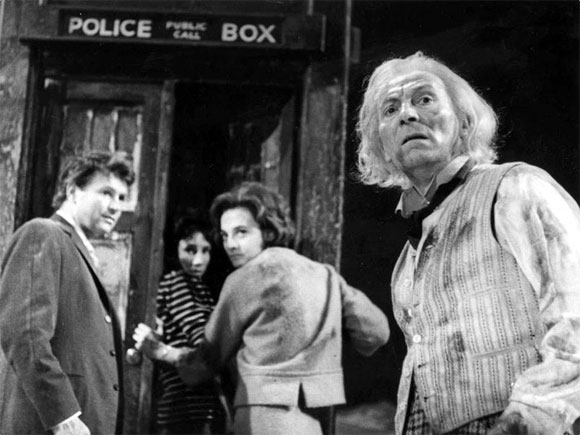
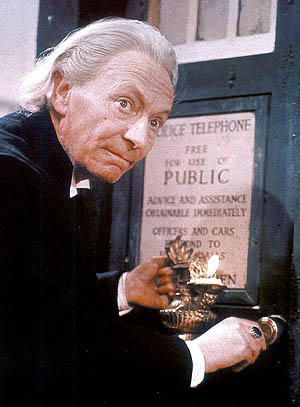
Earlier this year I had the opportunity to talk with Waris Hussein, the director of the initial ten episodes of Doctor Who, shortly before a special screening of An Unearthly Child, the very first episode of the series. Doctor Who debuted in black and white on the BBC on November 23, 1963 in the direct shadow of President John F. Kennedy's assassination. The episode introduced the world to the mysterious grandfatherly Time Lord known only as the Doctor, played by William Hartnell, and his iconic time machine the TARDIS.

In my one-on-one interview, Hussein revealed what was involved for Doctor Who to make its mark at a time when televised sci-fi was unheard of in the UK, as both a science fiction series that not only preceded Star Trek to the airwaves by nearly three years, but was also intended to educate children.

We discussed William Hartnell, the first actor to portray the one of the eleven incarnations of the Doctor on TV, whose initial take was that of a sinister Time Lord who also happened to have a granddaughter. Hussein was forthcoming on Hartnell's initial reluctance to take on the role, the hurdles they had to overcome in 1963, and gladly shared his thoughts on the still standing legacy of the show.

Shortly following our interview below, An Unearthly Child was screened for a packed audience at New York's Paley Center for Media, where he also provided live commentary and participated in a Q&A with the fans. He noted that the episode was a multi-camera live-to-tape shoot on the smallest set the BBC had to offer, a converted warehouse. With a mere single day shooting schedule and a budget of £2000, there was little time for elaborate blocking or retakes.

It's also worth noting that BBC announced in August production on An Adventure In Space and Time, a 90-minute TV movie that will chronicle the show's genesis and the various figures involved in Who throughout the years. As part of Doctor Who's 50th Anniversary, we will see many of the behind-the-scenes events spoken about here brought to life on the small screen.


Please set the scene for us when you were approached for Doctor Who. What was the state of televised science fiction like in 1963 Britain?

HUSSEIN: Very very little was known about science fiction apart from the films we actually got from America. I don’t think Britain had many approaches to the subject. I think Doctor Who was one of the very first. All the science fiction we saw were from movies that came out from here.

What was your first reaction to the driving concepts behind Doctor Who?

HUSSEIN: Never skepticism, some degree of intrigue and uncertainty. It’s a very eccentric idea if you think about it. What everyone says about it, and followed later I know by Star Trek, they were all set in ships and things that went into the universe and the outer regions. This is a telephone box which opens into a vast ship. How eccentric can you get? That itself was an intriguing subject matter, and then of course the characters. We should not forget that its not just science fiction, its an educational situation. We were trying to, through this medium and through this format, educate kids by doing one episode in the past and one episode in the future. That’s what the first one was: Fire. Looking for fire. That sort of thing. Then you enter the Daleks, and then you have the second lot which was about the travel across Europe getting to China (Cathay in those days), with Marco Polo. So one after the other, and that format still exists as we know, with much more embellishment.


So among other things, Doctor Who was conceived as televised history lesson for children?

HUSSEIN: Yes, but not to give them lectures, to give them stories with an adventure behind it as well. Marco Polo taught kids all about a civilization that they probably never would have herard about other than that. You know, China.


The backstory regarding the broken chameleon circuit of the TARDIS has given Doctor Who a unique  and now iconic association with the series. Was it from day one always the idea, budget contraints or not, to have the TARDIS permanently remain a police box?

HUSSEIN: This was Sydney Newman who created it, his original idea and was to my mind, genius. Who else would come up with something like this? I think it's brilliant. They are more or less diminished now. In fact it's become an iconic image.

Even at the show's inception, was the Doctor always referred to as only 'the Doctor'? Was there ever a name on even the earliest of the scripts you saw?

HUSSEIN: Never given a name, and that is still kept to this day.


The show in the last year has had many cryptic plot points teasing what the Doctor's actual name is, repeatedly playing with the question: "Doctor who?" Revealing the 'who' seems to spell catastrophic consequences for the universe.

HUSSEIN: Well I sincerely hope they don’t because there is a kind of mystery attached to this character. He’s been portrayed in many ways now, but I don’t think he’s a human being you see, and I don’t think they should make him totally human. He should be unpredictable, and that’s my feeling. That’s how it started anyway.

What was it like working with William Hartnell as the Doctor?

HUSSEIN: William was an eccentric actor as well as a character. He was very conservative in many ways in his approach to life. I think he was somewhat taken aback when he confronted a woman producer [Verity Lambert] because he was very much a male oriented person. And then a British Indian [director] for Heaven’s sakes! I was the very first Indian ever to be doing what I am doing. And I think it must have been a very unusual set of people that he confronted.  We had to woo him and persuade him to be a part of the team. I have to say I am happy he did become a part of it, we was a very good actor.

What was the reception to the show when it aired?

HUSSEIN: The first airdate was the same date when President Kennedy was assassinated, so there was a pall that descended on everything and the BBC had to repeat it. So I think as a result in an odd way we manged to pull ourselves out of this period and it was seen as an innovative show. I think a lot of people reflected this in their reaction. Thinking 'You know, maybe we are facing something unusual and there is a future in it.'


Do you have any particular favorite incarnations of the Doctor or Who moments from over the years?

HUSSEIN: I am reluctant to pinpoint things. I left it after the Marco Polo episodes, and I went on to do other things. So it was rather like giving birth, getting the kid adopted and moving on (laughs). Let someone else carry on the education. It's not easy to pinpoint and say 'Oh by the way I really like so and so,' because I think its unfair in many ways. Each story had its own embellishment and its own creativity. There have been incredible Doctor Who's subsequent, and also to my mind some that didn’t work out. As we know the show at some point was put to bed, and it was only revived by Russell T. Davies. So I do not like to pinpoint, I just think that it's great that it's still going.

What was it like shooting simultaneously with multiple cameras in a studio in addition to the limited visual effects of the time? Did that force you to be more creative?

HUSSEIN: We had none of the facilities of today. Forget computer generated stuff. We had to literally be inventive of what we did. Sand storms by interfering electronically on the monitor. The opening titles of Doctor Who were all shooting into monitors from one camera to another. That's why you get that strange wiggly effect. That's the kind of thing we had to be inventive of about. It was a whole different landscape that we worked in. We were pioneers, and what followed was the growth of something we planted.

Were two versions of the episode produced?

HUSSEIN: No. The pilot and then the main one. The first episode was the one after the pilot. Not two pilots, just the first. There were certain things we kept from the pilot. The script didn't change radically, but certain characteristics changed. We softened the Doctor, we did certain things like that. Dealt with Susan the granddaughter is a different way. Syndey Newman oversaw it and he was there as creator of the show. 

What do you expect from revisiting the episode all these years later tonight, plus providing live commentary to the audience? Is is hard to not rethink your work differently now in your head?

HUSSEIN: Absolutely. Gosh yes. I'm sure to be cringing tonight watching what I did. You know, it's bound to happen isn't it? I have not seen it for a very long time. In a funny way I have just not gone back to it. It's like revisiting something you have a pleasurable memory about. Well tonight we'll see it, and will see.

Are you looking forward to the the 50th Anniversary next year?

HUSSEIN: Absolutely. Yes, I hope they do something splendid with it.


Monday, October 29, 2012

Pierce Brosnan On Daniel Craig As James Bond: "I Haven't Seen His Movies!"

Pierce Brosnan, one of the elite six who have played 007 on the big screen, admits to Access Hollywood that he has yet to see a James Bond film starring his successor Daniel Craig.

In this video interview conducted during 2012 The Toronto Film Festival, while talking up his new film Love Is All You Need, the topic of James Bond and the character's upcoming 50th Anniversary was something that could not be overlooked, and Access' Scott Mantz first asked Brosnan to reflect on his contribution to the enduring legacy of the series from 1995 to 2002.

"It's a small group of men now who played this role. So I'm deeply proud to be a part of it. It changed my life. It in many ways allowed me to make my own company, make my own films, the Thomas Crown (Affair), or The Matador, or Evelyn. And it's just the gift that keeps giving. So once you are that man, and if you embrace it, celebrate it, you can have a great time."

But there was an unexpected response when asked about moving past the series and his reaction to the first time he saw Daniel Craig's performance as the legendary secret agent in Casino Royale or Quantum of Solace.

"I haven't!" he laughed.

"I haven't seen his movies. I haven't looked," said the actor, who starred as 007 in GoldenEye, Tomorrow Never Dies, The World Is Not Enough, and Die Another Day.

"I think it's time, Daniel. I know you're doing great out there," he said to camera to the current Bond. "I know he's stealing thunder as he should and will continue to do so," he added regarding his friend Daniel Craig.

He honestly elaborated his concerns on following Timothy Dalton's two film stint as 007. "It was so difficult to enter into that that mansion, that world. And then to do it, and to get away with it and to have it live around you. And you to be the character, and when it finished I just had to keep looking in another direction because it's a hard one to dig yourself out from under. Or to move on. Or how do you move on from it?'" he admitted.

But that's not to say that Brosnan has not had the opportunity to check out the newer films in the series. He recalled a time when he was confronted with the perfect chance to watch Casino Royale, as an in-flight movie no less.

"I was on a plane years back and Casino Royale came on, and I thought 'Ah well, 37,000 feet. It's a good vantage point to watch it, to see what this lad's up to, you know Daniel,"' he recalled.

"He and I know each other, we're friends. Anyway, I was watching it, it broke down, and I was like 'Excuse me? Can I just, you know? Kaput.' And so it started up again, and it broke down. And then I tried it a third time and it wouldn't work. And I thought 'Alright, time enough. Time enough for that. I'll come and see it.' But it's what a celebration. I mean there was no other movie like it in the history of the films in fifty years."

There probably would have been double take after double take on that plane, as people passed by Brosnan's seat and catching a glimpse of James Bond watching a James Bond movie. But for Brosnan, there may be little escaping the upcoming onslaught of the fantastic Skyfall (reviewed on NerdyRottenScoundrel.com here), which like GoldenEye, could not do the series more proud as a defining, if not a re-defining chapter.


Sunday, October 14, 2012

NYCC 2012 INTERVIEW: Kevin Smith Talks 'Comic Book Men' Season Two Return (and Following 'The Walking Dead')

On Friday I caught up wth Kevin Smith and his Comic Book Men cohorts Walk Flanagan, Mike Zapcic, Bryan Johnson and Ming Chen at New York Comic Con for rountable interviews to talk up tonight's season two premiere of their hit AMC show.

There was much discussed during the fun, laid back Q&A's, and to no one's surprise Kevin had a lot to say on a lot of different topics, Comic Book Men related or otherwise. So I will bring you much more from those interviews soon. But as far as tonight's sophomore year kickoff goes, here is what Kevin had to say about the last minute opportunity of getting to NYCC for promote it, and as expected, in the blunt manner he is famous for putting forward. 

"We weren't even supposed to be here. I sound like Dante, 'We weren't even supposed to be here today,' but we weren't until like two weeks ago I think," Smith said, catching himself quoting Dante Hicks from Clerks

"But basically there was no intention of coming to the Comic Con until the dust cleared from this season's shooting, and we were like 'Hey, we have time and I guess we start on Sunday.' It's not us going like 'Superman will save us!' but we do live in the Metropolis of The Walking Dead. So we never feel all that like 'We gotta push this show,' because we are in the wake of a f**king juggernaut," he pointed out in regards to the rollover viewers tuned into AMC on Sunday nights.
  
"Even if we retain a little piece of its audience, we're fine. So there's never like a sense of like 'Holy sh*t! We gotta press this show really hard.' But New York Comic Con is happening, these guys are like 45 minutes outside of the city, I was gonna be on the East Coast for the Boston show I'm doing tomorrow night. So I was like 'Let's be at the New York Comic Con again,' and boom, we got to be involved."

Despite Smith's confidence in the secure post-Walking Dead time slot, if a show doesn't click with a audience, people won't watch it. Comic Book Men fits in perfectly to the Sunday night line-up anchored by the blockbuster television Zombie juggernaut, its immediate re-run, and then the Chris Hardwick hosted live re-cap show Talking Dead.


Comic Book Men airs on AMC on Sundays at 11:30PM.

Thursday, September 27, 2012

DOCTOR WHO INTERVIEW: Karen Gillan Talks Filming In NYC and Shares Her Final 'Who' Scene Memories

Doctor Who fans are in the final stretch leading to this Saturday's much talked about fond farewell to the beloved Ponds, Amy and Rory, in the mid-season finale, The Angels Take Manhattan.

The fifth and final show that is set to air in 2012 was shot on location in New York City last April, and features the return of the popular villains, the Weeping Angels. Fret not, following the annual Who Christmas Special in December, the second wave of Seventh Season episodes are on-deck for 2013 featuring a new companion for the Doctor played by Jenna Louise-Coleman (who was unexpectedly introduced with questions aplenty in the season premiere, Asylum of the Daleks).

I had the opportunity to sit down with Karen Gillan for a roundtable interview last month shortly before the New York City premiere screening of Asylum at the Ziegfeld Theater. At that time I asked her about her impressions of shooting the Ponds' swan song episode of Doctor Who in the Big Apple, and what she recalled about her final moments on the set before the very last 'cut' was called.

After answering questions from some of the other journalist present, I welcomed Gillan back to the Big Apple (she and Matt Smith attended the 2010 screening of her Who debut episode at the Paley Center For Media, which introduced fans to Smith as the newly regenerated 11th Doctor), and asked her what her NYC filming experience was like. Fan and paparazzi pictures from Times Square and Central Park sets popped up online almost immediately.

"It was just the best experience, it really was. And it’s kind of interesting because when we did that Paley Center thing it was kind of at the beginning of introducing it to America for the first time, and then we were saying how much we’d love to shoot there. And actually, my final episode was shot in New York, which is kind of weird. But it was amazing," she recalled.

"We were in Central Park and we started shooting. Then all these people turned up and we didn’t expect it at all, at all. So we didn’t have any sort of security or anything like that, and then more and more turned up to the point where there was just hundreds upon hundreds of people lining Central Park and just screaming. And they were like, 'Sign my TARDIS!' It was just the most amazing thing."

"And then we ran to Time Square and quickly shot this scene and trying to draw as little interest as possible I guess. It was really funny seeing Matt running around Time Square in his bow tie. I was like, 'Am I imagining this? This is so weird!'" she said.

Before the interview wrapped, I asked her what she could share about shooting her final scene on the set of Doctor Who, which appropriately also featured Matt Smith and Arthur Darvill. Obviously they shoot out of sequence, so Gillan's actual final scene was (most likely) not Amy Pond's final scene in context of the show's continuity.

I was curious to hear her reminisce about the moments right before 'cut' was called for the very last time. Perhaps there was a conscious effort to do whatever it took to keep shooting. Did anyone purposely keep blowing their lines?

"Honestly it was the weirdest, most serene feeling on set all day," she recalled.

"And then it was our last scene walking into the TARDIS. And then we did about twenty takes of it though, which was really weird. Maybe the director was delaying it. It was lovely though because then Matt closed the door, and it was complete darkness and we all just hugged in the dark. It was like, 'It’s done!' It was just the most emotional feeling, it really was," she said.


Doctor Who: The Angels Take Manhattan airs on Saturday, September 29th at 9pm on BBC America.

Thursday, August 30, 2012

DOCTOR WHO INTERVIEW - Matt Smith Reveals How The Doctor Would Spend A Night Out In NYC

In part two of my selections from Saturday's roundtable interview with Matt Smith that preceded the U.S. Premiere screening of Asylum of the Daleks, the actor revealed what he thought The Doctor might do on a night of fun in New York City.

It seemed appropriate to me to maintain a line of NYC questioning given Smith's enthusiastic love for the Big Apple, and I thought it would be fun to hear about the possible things the 900 year-old Time Lord would do with a few hours to burn.

I asked that this was provided that the Weeping Angels, the eerie popular villains in the upcoming The Angels Take Manhattan, were not hot on his tail to spoil all of the Doctor's fun.

"His ideal night in New York?" Smith contemplated about the iconic character for a moment with a grin, before coming up with a bunch of ideas.

"I think maybe go and play some jazz with Woody Allen for a bit," he speculated, and assumed the Doctor might love to partake in an impromptu slow jam with one of New York City's most prominent film directors at a small time club.

"Perhaps grab a steak at Balthazar," having the insight that the Time Lord's palette has now moved beyond fish sticks and custard.

"Maybe go and stand on the top of the Statue of Liberty somehow."

"Take the TARDIS to the bottom of the Hudson see what's down there."

"I think he'd go back to the '40s or the '20s maybe, hang in Brooklyn and play baseball on the street."

But if there was one thing he was certain of regarding the Doctor's big night out, "He'd do it in a brilliant way," he said.

Doctor Who's seventh season premiere, Asylum of the Daleks, is set to air this Saturday at 9pm on BBC America. The Angels Take Manhattan, which took the cast and crew to shoot in NYC for the very first time in the show's near 50-year history, is the fifth episode and final episode of the first half of the season, and will air on September 29th. the Doctor Who Christmas Special picks up the story from there.


Wednesday, August 29, 2012

DOCTOR WHO INTERVIEW - Matt Smith: "I Want To Shoot Every Episode of 'Doctor Who' In NYC"

Shortly before last Saturday's New York City screening of Doctor Who's fantastic seventh season premiere, Asylum of the Daleks, I was among the lucky select group invited to have an audience with Matt Smith and Karen Gillan for roundtable interviews at the headquarters of BBC America.

Since the Doctor makes few house calls in NYC, it was without question an incredibly exciting opportunity for a Who fan who also happens to run a website like this.

In a roundtable interview, journalists are grouped at a table and take turns asking questions. My group was polite and cordial, and we each managed to get in a question or two in both the time slots we had with Smith and Gillan, who were extremely down to earth and forthcoming.

As a native New Yorker, I was very interested to know what Matt's impressions were of finally getting to shoot Britain's iconic Doctor Who in the Big Apple last April, which was the first time the show did so in its near 50 year history. So appropriately, that was the first question I asked him.

"First and foremost, I want to shoot every episode of Doctor Who in New York,' he said altogether with sincerity, enthusiasm, a big smile.

Shooting the episode. The Angels Take Manhattan, left a lasting impression on the actor. "I love this city. I love filming here. Everywhere you point the camera there is something brilliant to look at. I love this city, I just love it."

He also agreed when it was brought up that NYC can be considered a universe unto itself, "It really is."

Smith's answer on Saturday was a satisfying two years in the making response. I attended the event held at the Paley Center For Media in April of 2010, where Matt's debut episode as the Doctor was screened. Taking the stage in front of press and fans alike in a Q&A following that screening, he was at the time in awe of his very first NYC experience.

"I could live here. I love it here. What a city! You’ve got everything here man. So cool.”

Of course that response lead to the follow up of whether he would want to ever shoot across the pond. "I would love to do an episode here," he hoped. It should be noted that Executive Producer and Who showrunner Steven Moffat (on stage seated next to Smith and Gillan), had a simple more economic solution that night.

"It’s very easy to set us in New York. You know what will happen, you’ll be standing in front of a green cloth," he responded.

Thankfully the phenomenal success of Matt's run as the Doctor allowed them to finally do it, sans dreaded green cloth and all.

It was quite exciting to hear the rumors earlier this year (on the internet of course, where else do people like me get my hot geek gossip from?) that Doctor Who might be bringing production to New York City. Sure they have already been to the States, having filmed some of the sixth season premiere in Utah's Monument Valley, but The Doctor in NYC?  That was a whole 'nother thing altogether.

I heard my first real solid confirmation of this at an event in April that 'Alex Kingston's double had arrived in town,' so all the rumors seemed to be coming together. Sure enough, behind-the-scenes pictures surfaced online of the cast and crew shooting in Central Park and Times Square. In this day and age, it's impossible to shoot on location in New York City, or any exterior location for that matter, and not have pics turn up online.

But to see the Doctor actually standing in Times Square was quite exciting. Many additional images of Amy (Gillan), Rory (Arthur Darvill), and the Doctor in Central Park turned up online fairly quickly as well. They revealed very little conveying anything to do with the plot, but it didn't take long before the Weeping Angels had already been rumored/and or leaked as a the villains for the episode.

What also sets the NYC episode apart, scheduled to air in a few weeks, is that it marks the final appearance of the Ponds, the extremely popular husband and wife companions of the Doctor played by Gillan and Darvill. Their departure, from all accounts promises to be a true tear jerker of an episode, will make room for a new companion played by Jenna Louise Coleman, and introduced on the Doctor Who Christmas Special.

And after wishing us a good time at the screening at the Ziegfeld, Matt's thoughts on the season premiere set to air on Saturday at 9pm on BBC America?

"I think its a belter, I really do," he said.

Having seen it, don't miss it.

And to complete my Whovian experience, I was thrilled to shake the Doctor's hand on the way out of the room.

Check back here for what Matt had to say when I asked him what the Doctor would do on an ideal night of fun in New York City, in addition to Karen Gillan's Big Apple memories.  Plus I asked her to take us back to her final moments on the set of Doctor Who, shooting the last ever scene with the Doctor, Amy, and Rory in the TARDIS...

Tuesday, July 24, 2012

Jeremy Renner Talks Hawkeye Spin-Off & More 'Mission: Impossible'

While talking to Access Hollywood at the press junket for The Bourne Legacy, in addition to fielding questions on adding another successful franchise to his resume, the in-demand actor was asked for his reaction to phenomenal success of The Avengers, which has earned nearly $1.5 billion dollars at the worldwide box office.

"I have no control over that obviously. I have no say in why that happened," he said. "I'm happy to be a small fraction of that, and that piece of history I guess."

When it comes to much discussed possibility of a future spin-off film featuring Hawkeye (and perhaps teaming up with Scarlet Johannson's Black Widow), Renner was wide open and ready to reprise the role of the bow & arrow armed superhero, but admitted it was a decision not left entirely in his hands.

"It really doesn't matter what I think," he revealed. "It's up to Marvel, and maybe what the fans think. If they want something, I'm really interested in exploring that character more for sure."

As far as gearing up for another round in the Mission: Impossible series, where it has been rumored he would inherit the franchise from Tom Cruise, Renner would be eager and willing to continue playing Agent William Brandt.

"It's a crystal ball thing. It's up to Tom and Paramount. Again, I'm happy to do that. It's a lighter fare for me anyways and I like being a part of that."

You can check out the interview below:


SOURCE: AccessHollywood.com